

Featured Articles

How Automation Inside a Sales CRM Helps You Close Deals Faster
Discover how automation inside a sales CRM improves speed, consistency, and close rates for modern sales teams.
January 3, 2026
- 1 Min Read


In sales, timing is everything. The faster a team responds and follows up, the higher the chance of closing the deal. This is where automation inside a sales CRM creates a measurable advantage.
CRM automation eliminates repetitive manual tasks. Leads are assigned automatically, follow-ups are triggered without reminders, and deal stages move forward based on actions. Sales reps spend less time managing tasks and more time having meaningful conversations.
Automation also ensures consistency. Every lead receives timely communication, regardless of workload or team size. No opportunity is forgotten, and no deal stalls due to human oversight.
Another major benefit is insight. Automated CRMs track patterns—what actions lead to conversions, where deals slow down, and which follow-ups work best. This allows teams to continuously optimize their sales process instead of guessing.
Automation doesn’t replace salespeople. It supports them by removing friction, increasing speed, and creating a smoother path from first contact to closed deal.
Key Takeaways
- Automation improves response time and follow-up consistency
- Sales reps focus more on conversations, less on admin
- Faster execution leads directly to higher close rates
Featured Articles
How Automation Inside a Sales CRM Helps You Close Deals Faster
Discover how automation inside a sales CRM improves speed, consistency, and close rates for modern sales teams.
January 3, 2026
- 1 Min Read
In sales, timing is everything. The faster a team responds and follows up, the higher the chance of closing the deal. This is where automation inside a sales CRM creates a measurable advantage.
CRM automation eliminates repetitive manual tasks. Leads are assigned automatically, follow-ups are triggered without reminders, and deal stages move forward based on actions. Sales reps spend less time managing tasks and more time having meaningful conversations.
Automation also ensures consistency. Every lead receives timely communication, regardless of workload or team size. No opportunity is forgotten, and no deal stalls due to human oversight.
Another major benefit is insight. Automated CRMs track patterns—what actions lead to conversions, where deals slow down, and which follow-ups work best. This allows teams to continuously optimize their sales process instead of guessing.
Automation doesn’t replace salespeople. It supports them by removing friction, increasing speed, and creating a smoother path from first contact to closed deal.
Key Takeaways
- Automation improves response time and follow-up consistency
- Sales reps focus more on conversations, less on admin
- Faster execution leads directly to higher close rates
Featured Articles
What Is a Sales CRM — and Why Growing Teams Can’t Scale Without One
Learn what a sales CRM is, how it works, and why growing sales teams rely on CRMs to scale revenue without chaos.
January 3, 2026
- 1 Min Read
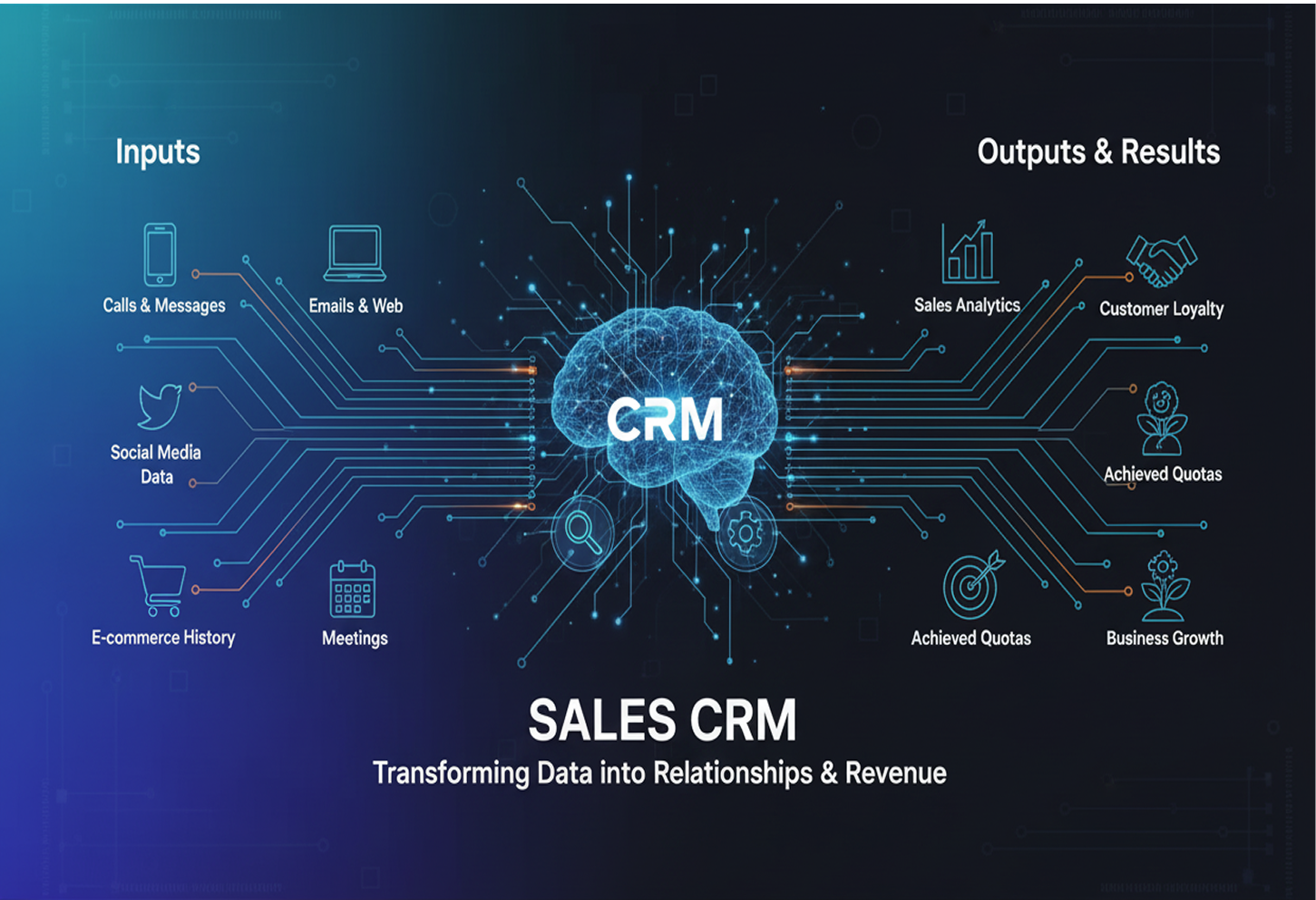
A Sales CRM (Customer Relationship Management system) is a platform designed to help sales teams manage leads, track interactions, and move opportunities through a structured sales pipeline. But for growing teams, a CRM is far more than a database—it’s the backbone of scalable revenue.
In the early stages, sales teams often rely on memory, inboxes, or informal tools to manage prospects. This works—until volume increases. As leads grow, conversations multiply, and deals overlap, manual tracking quickly breaks down. Important follow-ups are missed, ownership becomes unclear, and performance becomes hard to measure.
A sales CRM brings structure to this chaos. It centralizes customer data, logs every interaction, and creates visibility across the entire sales pipeline. Managers can see what’s happening in real time, while sales reps know exactly who to contact next and why.
More importantly, CRMs create repeatable sales processes. Instead of relying on individual effort or tribal knowledge, teams operate with consistent stages, actions, and accountability. This consistency is what allows teams to grow without losing control.
For any team serious about scaling revenue, a sales CRM isn’t optional—it’s foundational.
Key Takeaways
- A sales CRM centralizes leads, conversations, and deals
- Growing teams need structure to avoid missed opportunities
- Scalability depends on visibility, consistency, and process